
More Stories from East Africa's past for you to enjoy
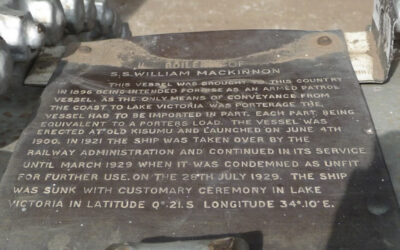
How did Smith Mackenzie Begin (part two)
Firmly established in Zanzibar, the firm Smith Mackenzie was in an excellent position to take advantage of the opportunities for trade on the mainland once the Imperial British East Africa Company penetrated the interior of the lands that were to become Kenya and...
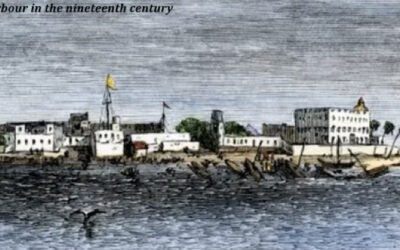
How did the firm Smith Mackenzie begin? (part 1)
In the 1870s The Sultan of Zanzibar, Seyyid Bhargash, was well disposed towards Westerners, particularly if their activities boosted the island’s commerce. The British India Steam Navigation Company (BISN) started a regular service of steamers between Bombay and Aden...
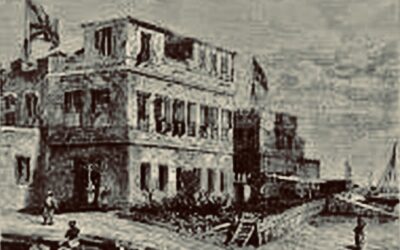
The Old British Consulate in Zanzibar
As part of their attempts to counter the Slave Trade, the British sent Atkins Hamerton to Zanzibar in 1842 to discover the extent of the trade in human beings. He was lent a house by Seyyid Said, the Sultan of Zanzibar, on the foreshore near the Sultan’s palace. It...
The Settler Rebellion in Kenya, 1923
In the last Old Africa, Karen Rothmyer talked of the 1923 rebellion in ‘When Kenya’s White Settlers Threatened UDI’, so I thought I would provide further details about it. Winston Churchill had proposed a common electoral role, one Indian member on the Executive...
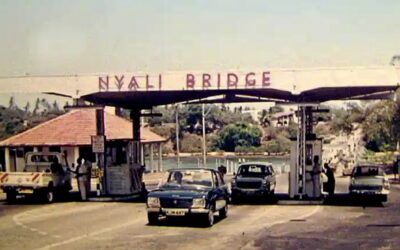
The Nyali Bridge
The Old Nyali Bridge On 8 Aug 1931 Mombasa stopped work. The Governor of Kenya was poised to open a new bridge linking Mombasa island to the north mainland, and everyone wanted to be there. The Governor arrived in a motorcade and in his formal speech opening the...
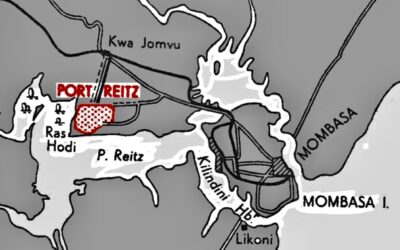
The Naming of Port Reitz
To the north-west of Mombasa island is an inlet and on its mainland side is a flat piece of land later named Port Reitz. It is now the site of Mombasa’s Moi International Airport. Why was this area called Port Reitz? In 1824 a young lieutenant in the Royal Navy set...
The First Europeans in Mombasa
The First Europeans in Mombasa Recently archaeologists have said that the wreckage of a ship discovered off Malindi may have been from legendary explorer Vasco da Gama’s final voyage across the Indian Ocean. It is a Portuguese vessel and may have been Da Gama’s Sao...
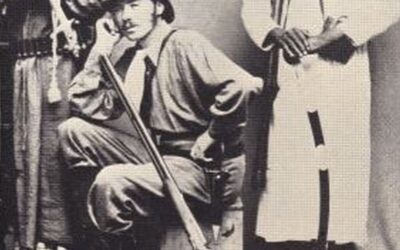
Thomson in Maasailand
Thomson in Maasailand Recently there have been articles in Old Africa about the Maasai, so it would be interesting to look at early European contacts with those peoples. In 1877 Maasai warriors had prevented Johann Maria Hildebrandt, a German botanist, from travelling...
Billiard Balls, Pianos and Elephants
Billiard Balls, Pianos and Elephants Before the invention of plastics, billiard balls, piano keys, combs and scores of other items were made of ivory. Playing the piano was called ‘tickling the ivories.’ More ivory was used for piano keys than for all other purposes...
The Shooting of little Willie Hall at Nairobi School in 1920
The Shooting of little Willie Hall at Nairobi School In 1920 William Harold Hall, an eleven-year-old boy boarding at Nairobi School, was shot dead in the school dormitory by another pupil. This sorry incident was reported to Viscount Milner, Secretary of State for the...
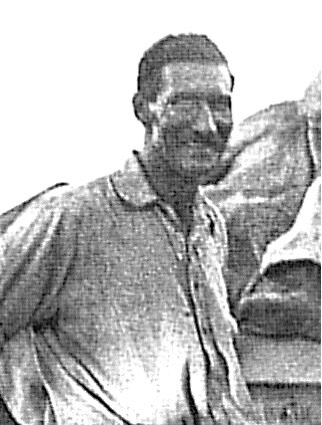
‘Long Lou’ Llewellin and his Hats
‘Long Lou’ Llewellin and his Hats ‘Long Lou’, a six-foot-four, broad-shouldered man, ‘beloved of ladies and a very Bayard in battle,’ was Gloucestershire-born John Lionel Bretherton Llewellyn Llewellin. He wore an eyeglass and sandals, with often nothing in between...
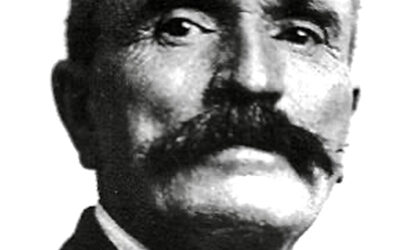
‘Biltong’ Ross
Charles Joseph Ross ‘Biltong’ Ross was a larger-than-life Kenyan character. Born in Australia on 4 July 1857, he joined the Australian Mounted Police, rounding up gangs of bushrangers. As a young man he travelled to America where he lived with native Americans and...
Margaret Griffiths, a Missionary Wife
Margaret Griffiths, a Missionary Wife The women who accompanied their husbands on their early missionary endeavours in East Africa were a stalwart bunch. One such was wife of John Bynner Griffiths, a Methodist missionary at Mazeras. Margaret E. Edwards was born in...
The Kenya Firm of Hughes Ltd.
The Kenya Firm of Hughes Ltd. The firm of Hughes is famous throughout Kenya, Uganda and Tanzania. What were its origins? It was the brainchild of John Joseph Hughes, a twenty-year-old sent to Kenya in 1920 as a buyer for the London firm of fibre merchants Robinson,...
A Titanic Survivor in Kenya: Amy Fenwick
A Titanic Survivor in Kenya: Amy Fenwick We often read about the activities of men in early Kenya, but we hear little of their wives. William Fenwick went to Kenya in 1920 as an administrative cadet, the first rank of those who became district and later provincial...
Naivasha Sports Club Celebrates 100 Years
100 Years at Naivasha Sports Club: 1922-2022 is a new book now available from Old Africa books. Contact blake@oldafricamagazine.com to order your copy. Shel Arensen and Chuck Bengough researched the history and wrote the book. A box filled with books of handwritten...
JW Arthur, Missionary
JW Arthur, Missionary: An Early Supporter of African Interests in Kenya John William Arthur, born in 1881, a medical doctor trained in Glasgow, joined the Church of Scotland Mission in Kenya in 1906. He was posted to the Kikuyu mission, where he arrived on 1 January...
The other John Paterson
The Other John Paterson Many of us have heard of the John Patterson who was involved in overcoming the man- eating lions of Tsavo. But there was another man of the same name who had an important, if not so spectacular role. The other John Paterson brought both coffee...